‘Stadt Nach Acht’ Conference in Leipzig 2026: How Germany’s live music and club culture is fighting for its future
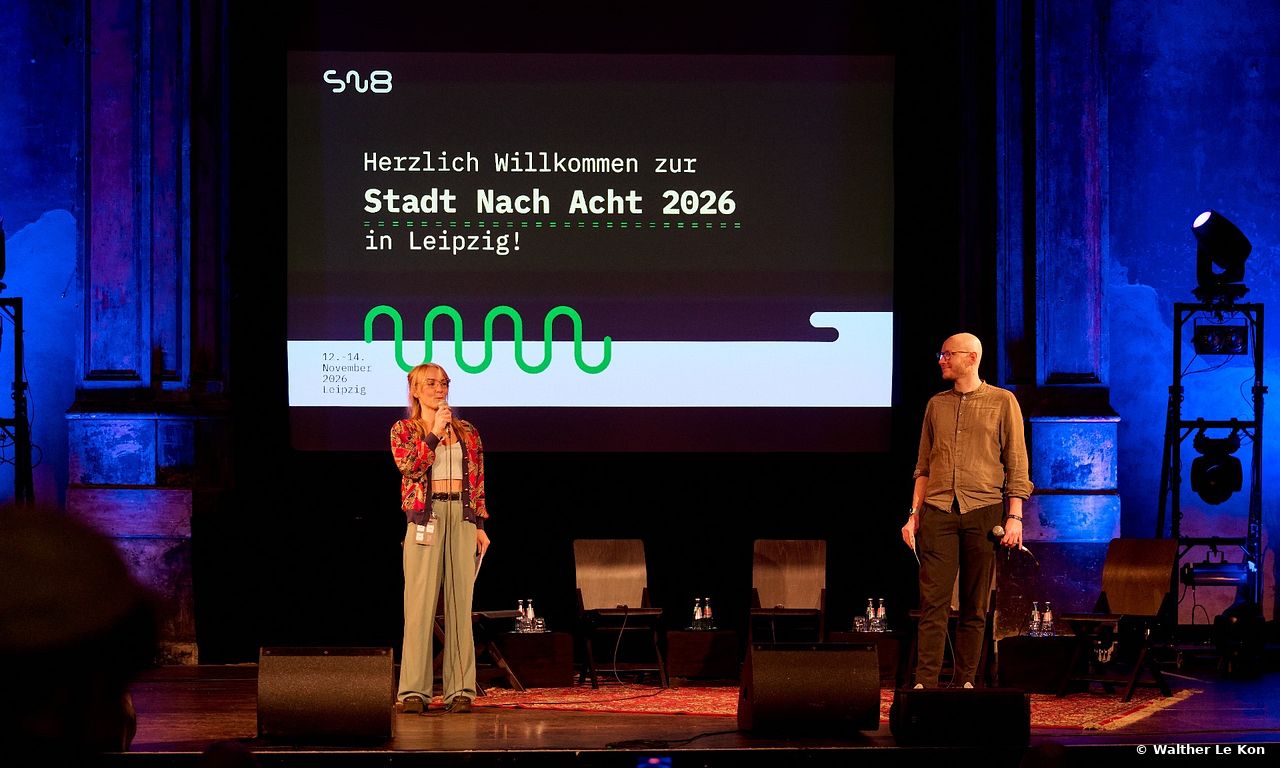
Last week, the debate centred on the social significance of nightlife, access to cultural venues and the political responsibility for their preservation: how can the live music and club scene help shape its own future under these conditions, and what support does it need to do so?
Around 850 participants per conference day from the worlds of culture, politics, public administration and academia – including numerous international guests – discussed these issues from 12 to 14 November 2026 at the 9th edition of the ‘Stadt Nach Acht’ nightlife conference in Leipzig. The conference did not stop at simply analysing the problems: under the motto“Safe.Night.Live.”, the focus was on concrete solutions for a sustainable nightlife culture – ranging from solidarity-based funding models and opportunities for local tourism and urban planning to prevention and awareness-raising.
When ‘sold out’ is no longer enough
Economic stability and sustainable framework conditions for live music and club culture were among the conference’s key themes. After all, what happens when even successful events can no longer secure the economic survival of clubs and festivals? Just how fragile the economic foundation of nightlife has become was highlighted by the panel discussion “Award-winning, sold out, insolvent?”, presented by Initiative Musik and KAPUT magazine, featuring representatives from APPLAUS-award-winning clubs in Leipzig and Chemnitz, as well as artists. Key figures from the club and music scene spoke openly about how rising costs and changing nightlife habits are posing existential challenges even to venues that have previously been successful. Added to this is the pressure from large, industrial booking and event organisations, whilst many small cultural venues and independent small-to-medium-sized businesses face difficult succession issues. The focus was therefore also on the question of what framework conditions are needed to ensure the long-term sustainability of the cultural work carried out by these venues.
At the same time, ‘Stadt Nach Acht’ discussed approaches to securing the long-term future of live music and club culture: In a panel discussion on the federal noise abatement programme presented by Initiative Musik and LiveKomm, Holger Mann, Member of the Bundestag, discussed the importance of noise abatement for the coexistence of clubs and neighbourhoods alongside representatives from Initiative Musik and two clubs funded by the programme. Following considerable efforts, the programme, which is based at the Federal Ministry of Housing, Urban Development and Construction, can continue – albeit with a reduced budget.
Solidarity-based funding models such as the ‘Club-Euro’ and ‘Live-Euro’ rely on collective support for live music and club culture. In the panel discussion ‘One Euro, Many Cities’, experiences from existing local models were linked to the prospect of nationwide implementation. Xenia Reich-Hemmerich (Kulturberatung Jena/Nacht Konsil) said, with regard to the acceptance of solidarity-based funding models: “The model must be in vogue; we need a critical mass of people who want to get involved!” She emphasised that gaining broad support was crucial. At the same time, the focus was on integrating such models into existing structures. “We must protect the fragile ecosystem of live culture,” emphasised Felix Grädler, board member of the LiveKultur Federal Foundation and initiator of the Live Music Fund / nationwide ‘Club Euro’ project.
More than just nightlife: cultural venues as social infrastructure
Clubs and festivals are places where community is forged, cultural diversity is lived out and social change is negotiated. Their preservation is a sign of the cultural and experimental freedoms a society enables and protects. Right-wing influence, attacks on activists and the increasing pressure on cultural spaces were among the issues addressed by the panels at LiveKomm, LiveKommbinat Leipzig and MiNa – the Central German Night-time Culture Conference. The discussions centred on how night-time culture can take a stand, withstand conflicts and strengthen social cohesion. The question of who shapes night-time culture and who has access to it also took centre stage. Discussions about festivals, voluntary work and the perspectives of younger generations highlighted just how closely cultural diversity is linked to participation, sustainable structures and the passing on of knowledge. Cultural anthropologist Dr Nikola Nölle summed up the social dimension: “Festivals are places where community is negotiated.”
The future of nightlife as a shared task
Whether clubs, live venues and festivals can survive in the long term is decided not only at the box office, but also within local government and political bodies: in collaboration with the Nacht Konsil, panel discussions examined local planning processes. Other presentations addressed the future of city centres, night-time mobility and music clubs as ‘building blocks of the city’. MiNa focused, amongst other things, on the scientific foundations for a data-driven night-time cultural policy, whilst the City of Leipzig and BPM Saxony emphasised international perspectives and exchange, providing fresh insights – for example on the topic of nightlife as a tourism factor – from cities including Amsterdam, Bratislava, Prague, Kyiv and Kraków.
The importance of regional cooperation and music venues outside the major cities was demonstrated by the satellite events held for the first time in Döbeln, Zittau and Chemnitz in the run-up to the conference, organised in collaboration with BPM Saxony. Their experiences were also incorporated into the main programme; patron Elisabeth Kaiser, the Federal Government Commissioner for Eastern Germany, emphasised the importance of these regional perspectives in her opening address at the conference. Leipzig itself also provided examples of collaboration between the local music scene and the city administration.
Leipzig’s Mayor and Deputy Mayor for Culture, as well as Chair of the Culture Committee of the German Association of Cities, Dr Skadi Jennicke, highlighted the now five-year-old Leipzig model of the ‘Botschaft der Nacht’ (Message of the Night), with Anne Rauschenbach (Nightlife Co-ordination Office) and Nils Fischer (the city’s specialist officer for night-time culture), as well as the voluntary NachtRat, as an exemplary link between the two sectors.
In addition to economic and urban policy frameworks, the discussion also centred on how nightlife can be made safer and more accessible for different people. Awareness, prevention, night-time mediation, the removal of barriers to access and drug checking were discussed from various perspectives. The event concluded with a community-focused thematic day organised by the Drug Scouts to mark their 30th anniversary.
A network for the future of live culture
‘Stadt Nach Acht 2026’ highlighted just how closely economic prospects, social and cultural participation, and political framework conditions are intertwined when it comes to the future of live culture. ‘Stadt Nach Acht’ brought together perspectives that are crucial for the future of live culture but are often addressed in isolation: cultural and economic development, urban development, health and social participation.
‘Stadt Nach Acht’ is organised by the Federal Foundation for Live Culture (LiveKultur). The 2026 conference was funded by the City of Leipzig and the Initiative Musik using project funds from the Federal Government Commissioner for Culture and the Media (BKM). Numerous other partners are involved in the organisation and delivery of the conference, including the Office for Pop Culture and Music in Saxony (BPM Sachsen), Drug Scouts, LiveKommbinat Leipzig, Leipziger Gruppe, LiveMusikKommission (LiveKomm), MiNa – Central German Night-time Culture Conference (MiNa), Nacht Konsil (Network of Municipal Night-time Commissioners), NachtRat Leipzig, ARD Kultur, mdr – Mitteldeutscher Rundfunk and KREATIVES SACHSEN. This broad collaboration makes ‘Stadt Nach Acht’ a platform for diverse perspectives and facilitates an interdisciplinary exchange between culture, society, business, politics and public administration.
Leipzig’s club and cultural scene played an active role in the conference, both in terms of content and organisation: young collectives helped shape the programme, whilst numerous dedicated individuals from initiatives, venues and club teams supported the on-site implementation, from raising awareness to providing technical support.
In 2026, Stadt Nach Acht was awarded the ‘National Urban Development Policy’ label and recognised as a continuing professional development event by the Saxony Chamber of Architects.
You might also like these articles

Join the community!
Subscribe to our eventletter for the latest news from the events industry.